Are There Different Types of Sloths?
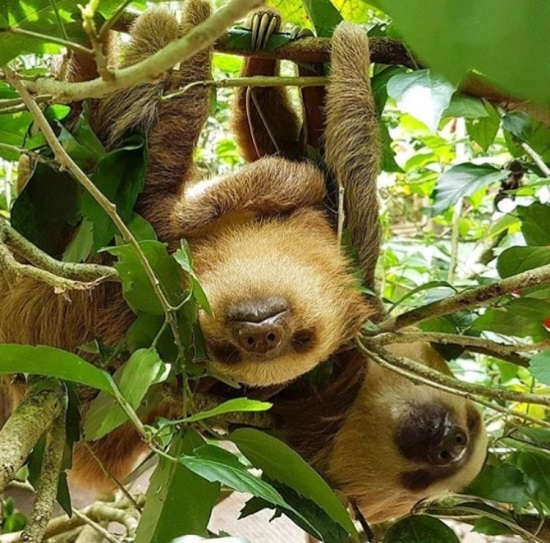
Two types
- Two-toed and three-toed
Six species
Two-toed
- Linnaeus’s two-toed sloth (Choloepus didactylus)
- Hoffman’s two-toed sloth (Choloepus hoffmanni)
Three-toed
- Pygmy three-toed sloth (Bradypus pygmaeus)
- Maned sloth (Bradypus torquatus)
- Pale-throated sloth (Bradypus tridactylus)
- Brown-throated sloth (Bradypus variegatus)
What Are They?
Two-toed
Linnaeus’s two-toed sloth (Choloepus didactylus) | Hoffman’s two-toed sloth (Choloepus hoffmanni)
- Two-fingered sloths are significantly larger than their three-fingered counterparts.
- They possess a long, pig-like snout and are only capable of sweating from the tip of their nose.
- Their hands and feet have soft, hairless palms and soles.
- They have long, brown hair
- Two-fingered sloths are more active and generally faster-moving than three-fingered sloths.
Linnaeus's two-toed sloth is commonly kept in zoos around the world
because it is relatively easy to export them from the countries where they naturally live.
Three-toed
Pygmy three-toed sloth (Bradypus pygmaeus) | Maned sloth (Bradypus torquatus) |
Pale-throated sloth (Bradypus tridactylus) | Brown-throated sloth (Bradypus variegatus)
- All four species feature small, rounded heads, tiny ears, and a constant smile.
- Three of the four species are distinguished by a dark mask around their eyes, other than maned sloths.
- They have short, stubby tails about 6–7 cm long (around 2.5 inches) along with three long fingers on each limb.
- Three-fingered sloths have very long arms– twice as long as their legs!
- Three-fingered sloths have fewer ribs (28) than two-fingered (46)
- They have nine neck vertebrae while almost all the other mammals have seven of them.
Brown-throated sloth (Bradypus variegatus) is probably the most well-known of all sloths.
Pygmy three-toed sloth (Bradypus pygmaeus) are one of the most critically endangered mammals in the world.